
Flag History & Evolution
EVOLUTION OF THE US FLAG
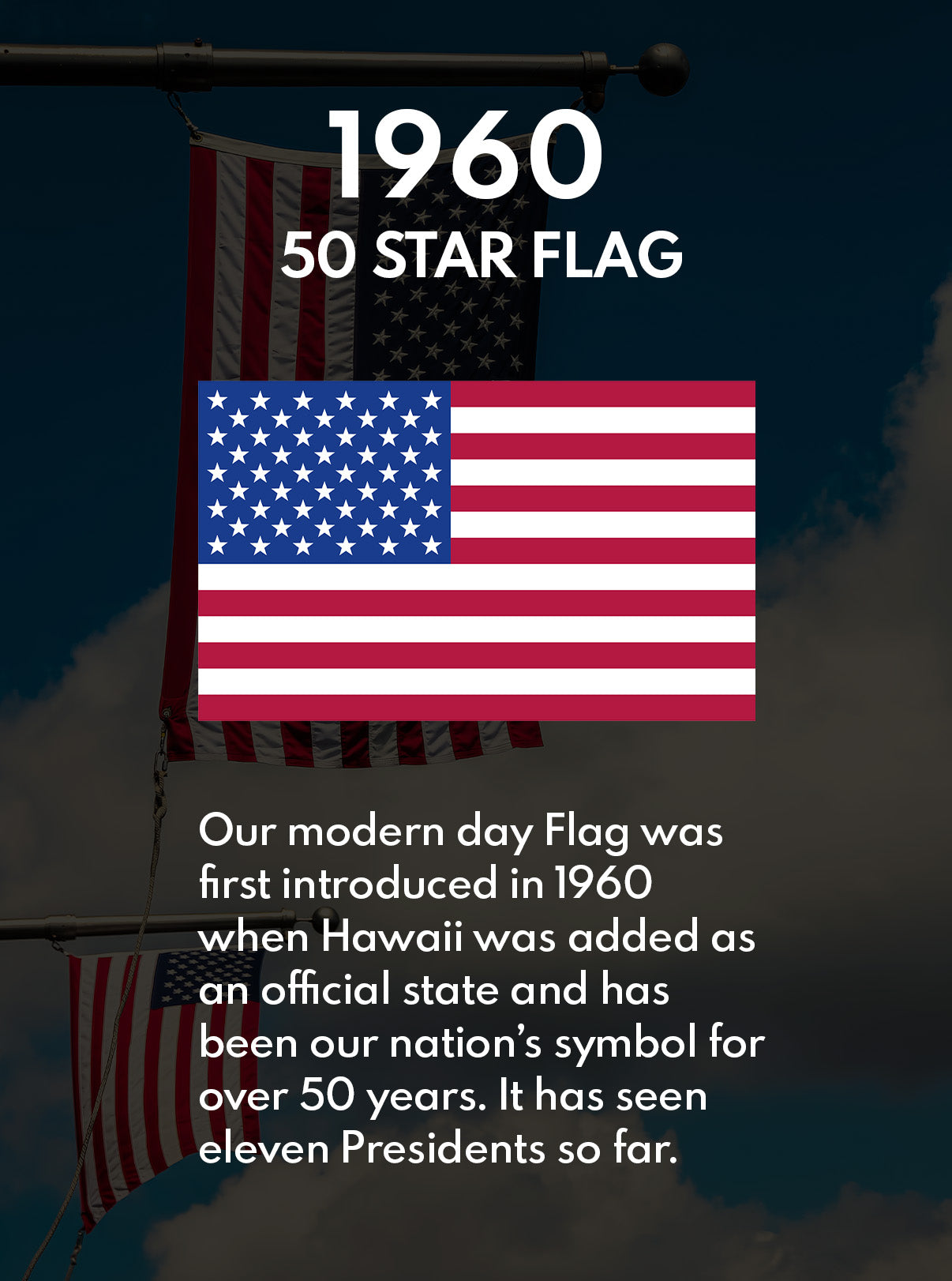
When the United States Flag was first recognized by Congress in 1777, it did not have the familiar thirteen stripes and fifty stars that it does today. Although still red, white, and blue, the Flag had thirteen stars and stripes to represent the original thirteen colonies of the United States. Since the United States' independence, the national Flag has been revised twenty-seven different times. Each time a state (or states) was added to the union, another star had to be added to the top left corner of the Flag. The most recent version of the Flag was recognized in 1960 when Hawaii became a state. The evolution of the United States Flag is therefore not only a history of an American symbol but the history of this country's land and people. The Flag is a unifying symbol that binds together Americans from the east to west, north to south. Each state has a star sewn into a blue background that represents vigilance, perseverance, and justice. The red stripes symbolize valor whereas the white means purity and innocence. Although the design of the US Flag was altered – and may continue to alter – as states were added, the red, white, and blue remains unchanged. These colors represent characteristics of the American people throughout history, across the nation.


MOMENTS IN FLAG HISTORY
The Flag of the United States is a symbol of freedom and patriotism. Though the design of the Flag has been portrayed differently, the stars and stripes have been a constant companion throughout America's lifetime.
The Flag of the United States often flies most prominently during times of national crisis and mourning. Since our struggle during the Revolutionary War, the Flag has served as a symbol of unity which has galvanized an injured nation during times of conflict, such as the War of 1812, the First and Second World Wars, and the Civil Rights Movement. The Flag also worked as a symbol of union during periods of tragedy such as during 9/11.
We have also seen the Flag as a rallying cry during periods of national celebration. The moon landing in 1969 was among America's greatest accomplishments, and one of the most famous images of that event is of the Flag of the United States being planted on the moon's rocky surface.
Today, the Flag still carries its weight as a symbol of unity and freedom. Only time will tell what future events will become moments in Flag history.
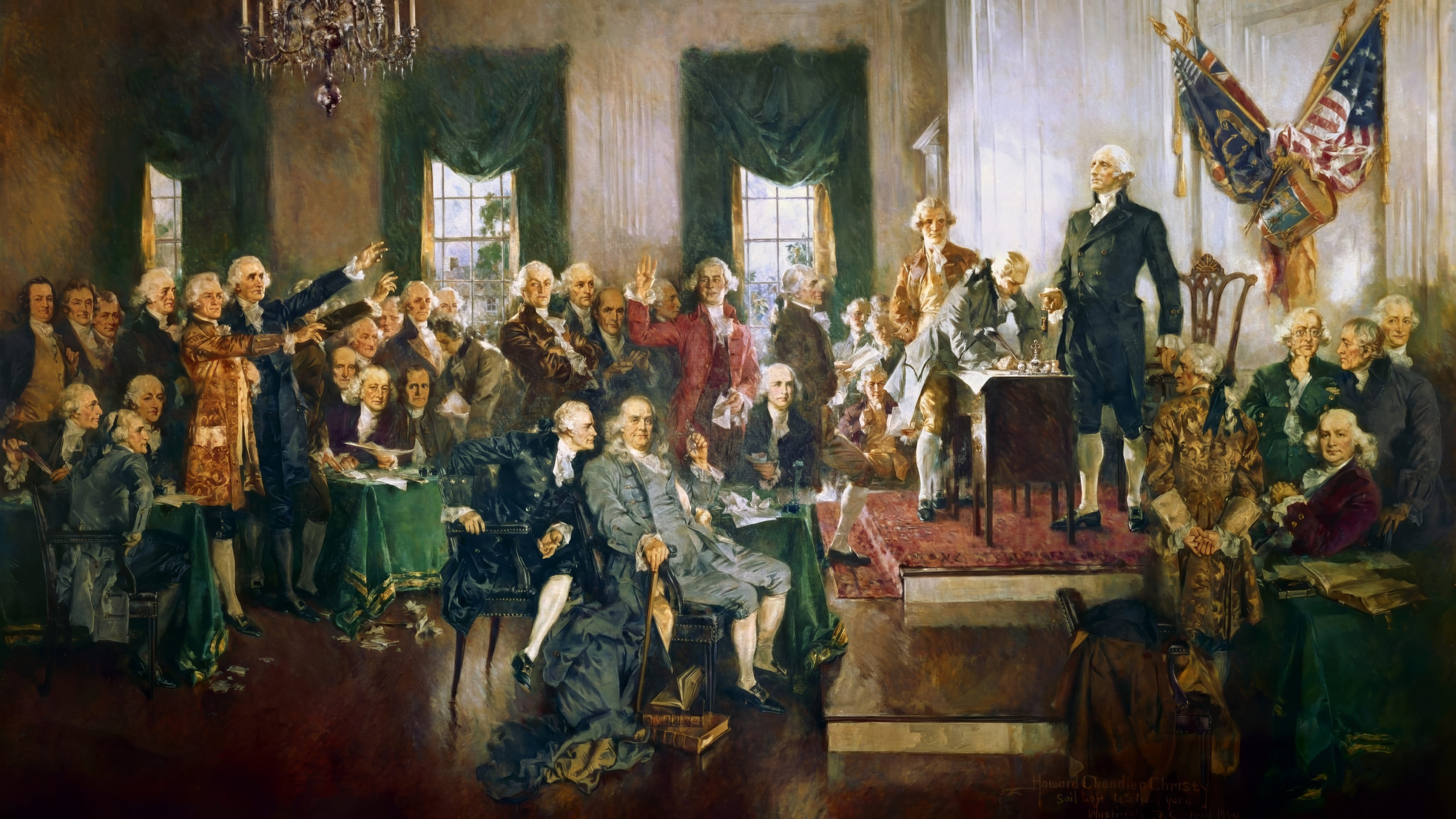
1776 - A NATION AND SYMBOL BORN
By 1776, the Thirteen Colonies had been in a gruesome year-long war with Britain. When the Declaration of Independence was signed in July of that year, its inception marked the birth of our nation. The Thirteen Colonies, now with a strong voice and determination, used the Flag as a new symbol. It is one that is still used to this day — a symbol of freedom and the people's will to overcome.
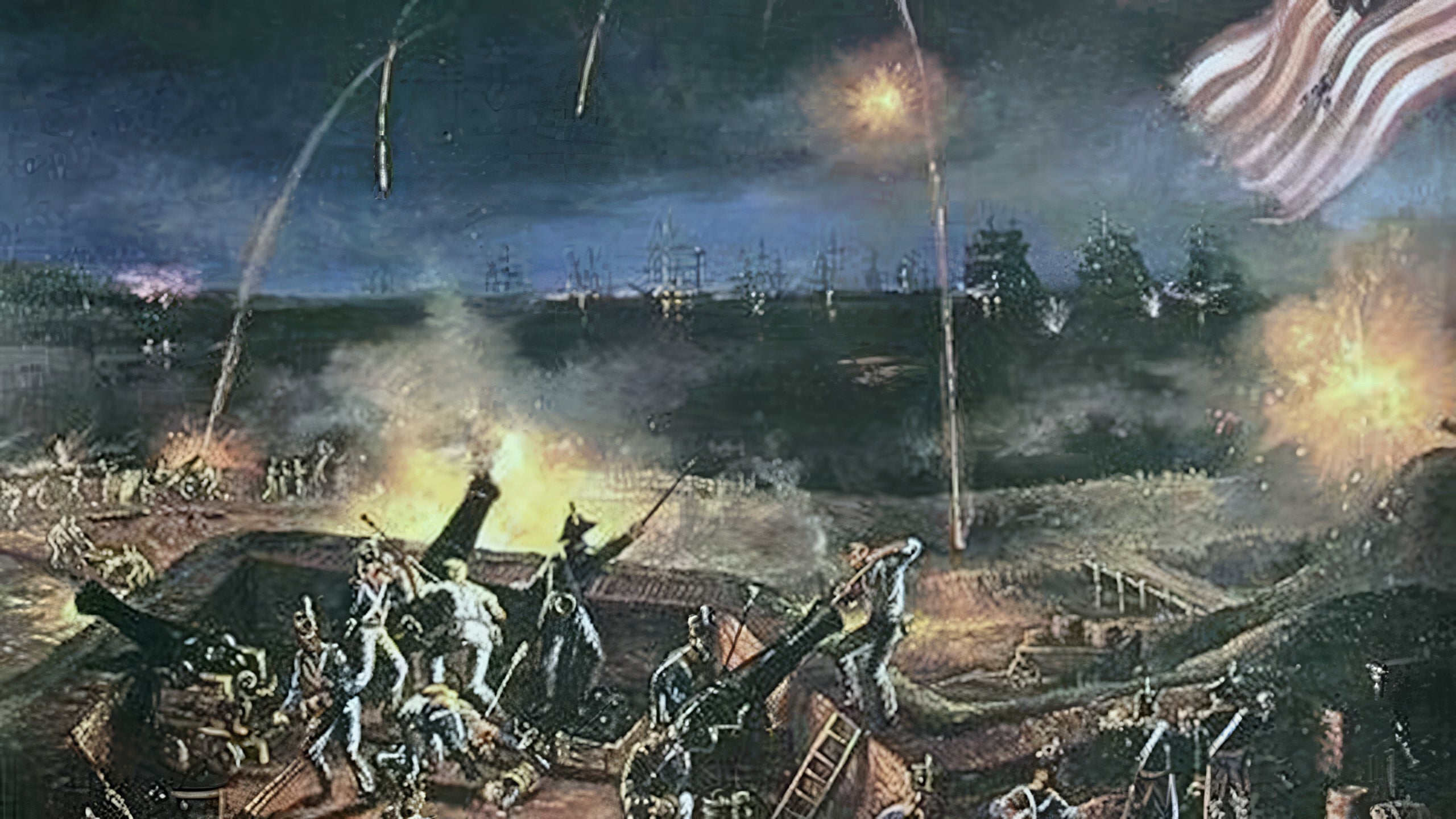
1814 - THE STAR SPANGLED BANNER
1814 was the year that Fort McHenry was bombarded and with its fall, rose a significant piece of American literature and symbol of pride. A young lawyer by the name of Francis Scott Key was on a nearby truce ship when he witnessed the attack on McHenry. Although there was great despair over this defeat, Francis Scott Key, and many in his company, found the American Flag still intact. He was so overcome by this symbol of hope that he penned the Star-Spangled Banner.
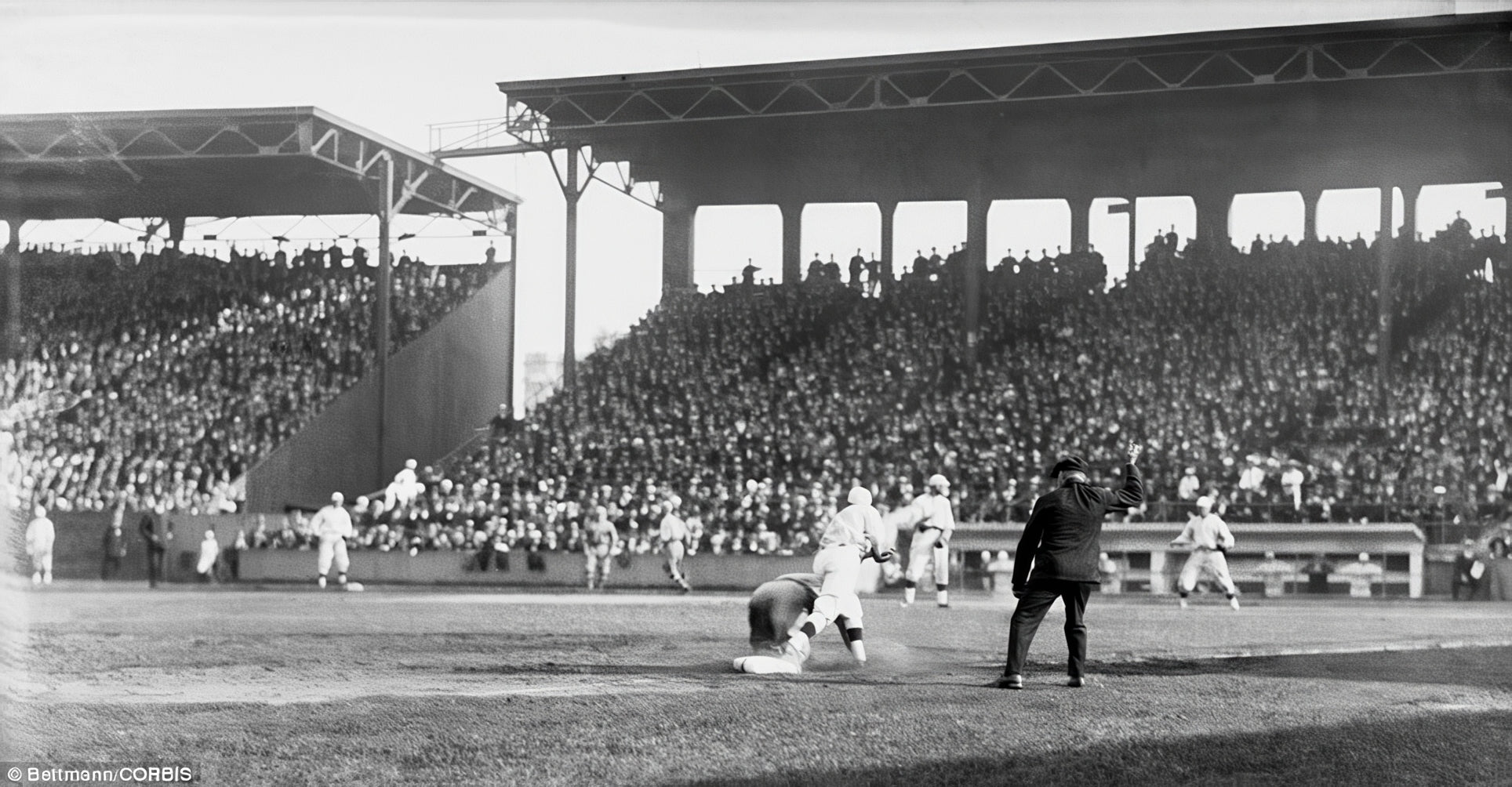
1918 - PLAYING OF THE STAR-SPANGLED BANNER BEFORE THE WORLD SERIES
While the Star-Spangled Banner had been written over 100 years before the World Series of 1918, it was then when it was sung for the first time. A band played the Star-Spangled Banner during the seventh inning of game one. The crowd, standing with their hands over their hearts, sang in unison. This marked the beginning of a tradition that is still held to this day.
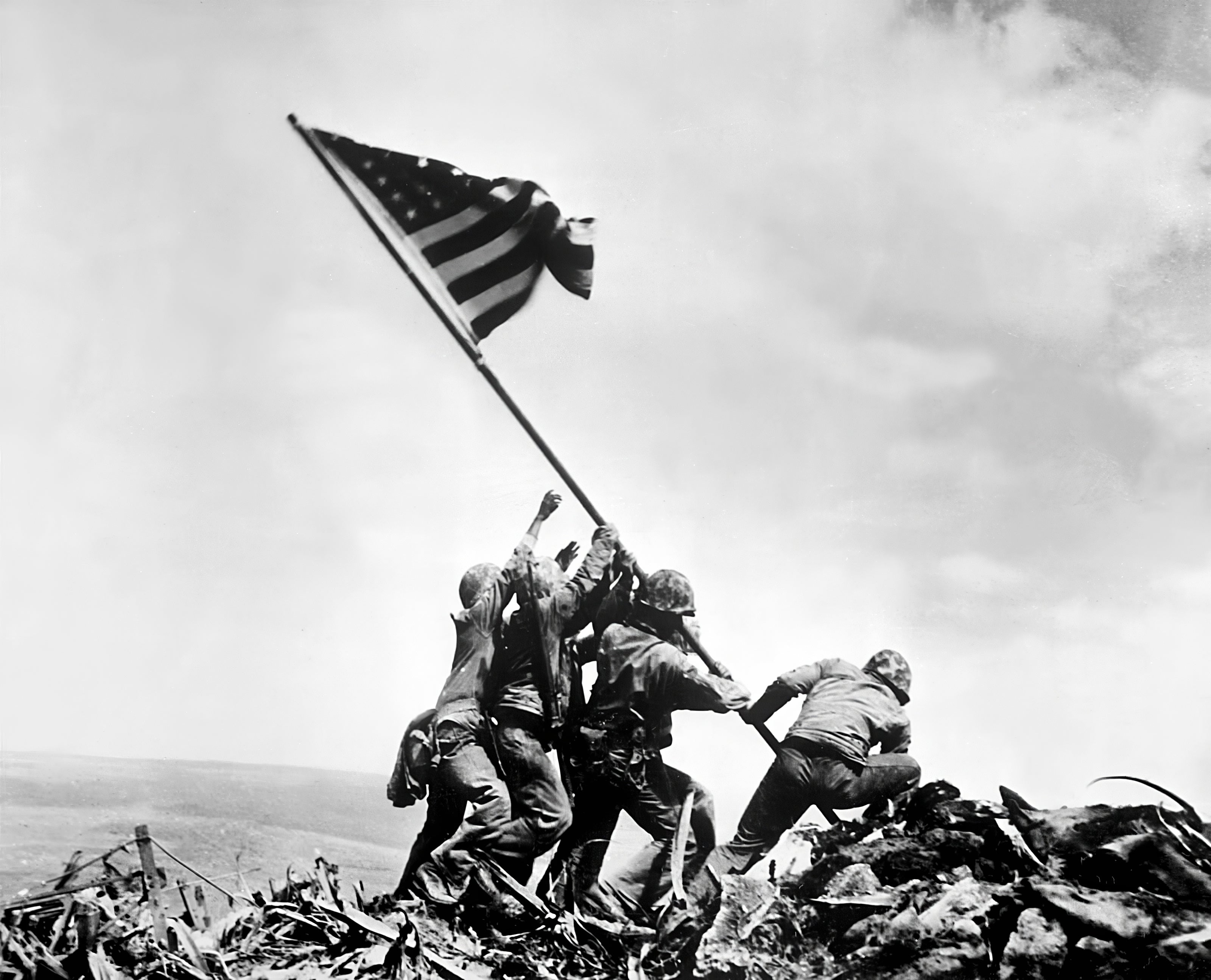
1945 - U.S FLAG RAISED ON IWO JIMA
World War II is a significant time period in the history of the United States. The bloodshed left an imprint in the hearts of those at home and abroad. Before the end of the war in 1945, however, the American people were awarded with a image of hope and strength. The capture of Iwo Jima is one of the most recognized events in the World War II timeline. Two Flags were raised and waved proudly at the top of Mount Suribachi. Later in the day, the Flag was replaced with a larger Flag. The infamous photograph was the inspiration for the Iwo Jima Monument in Washington.
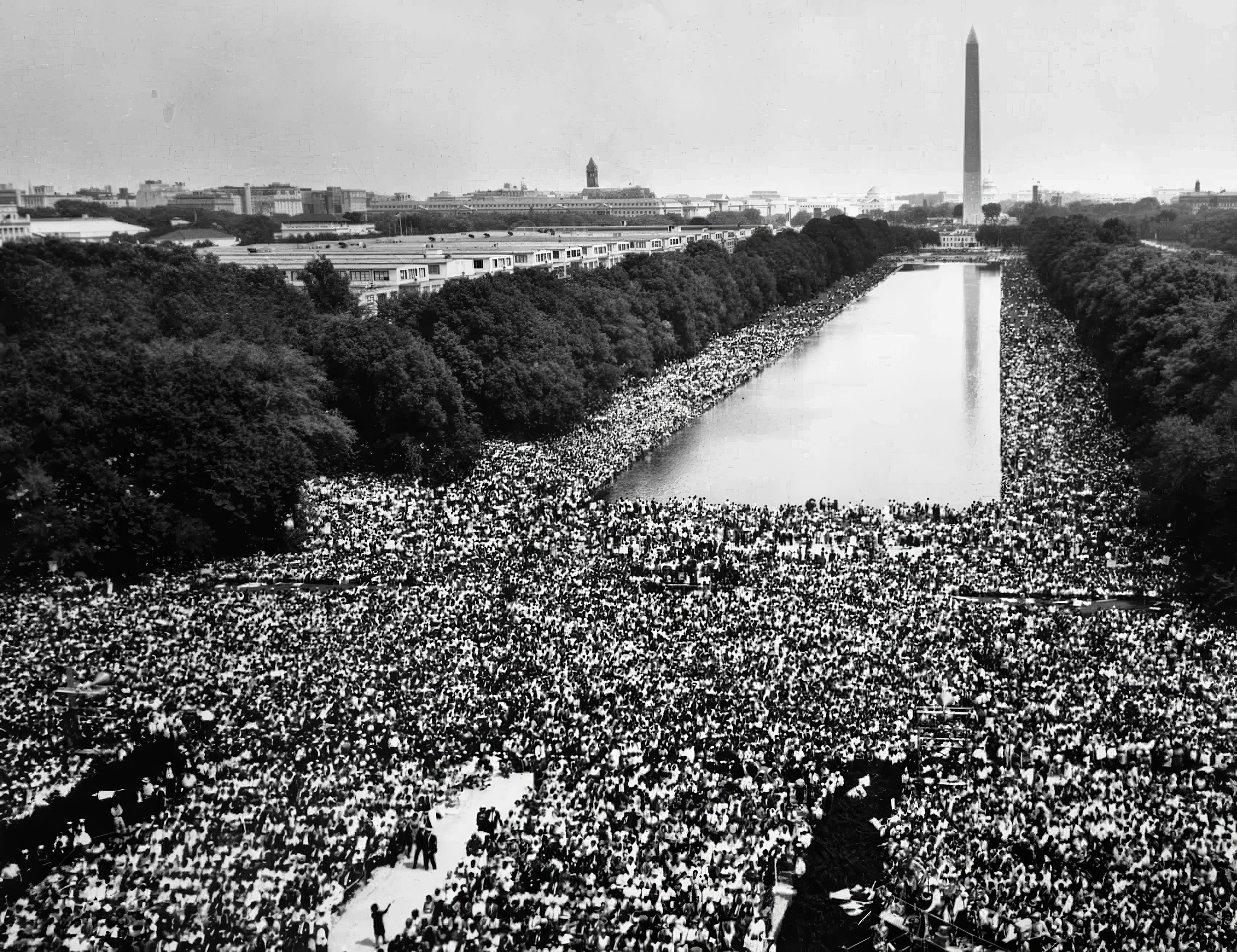
1963 - MARCH ON WASHINGTON
The March on Washington in 1963 was a defining moment in the Civil Rights Movement. As thousands gathered at the Lincoln Memorial, the American Flag flew high above the crowd, symbolizing the nation's promise of freedom and equality for all. Dr. Martin Luther King Jr. delivered his iconic "I Have a Dream" speech, a vision that continues to inspire generations.
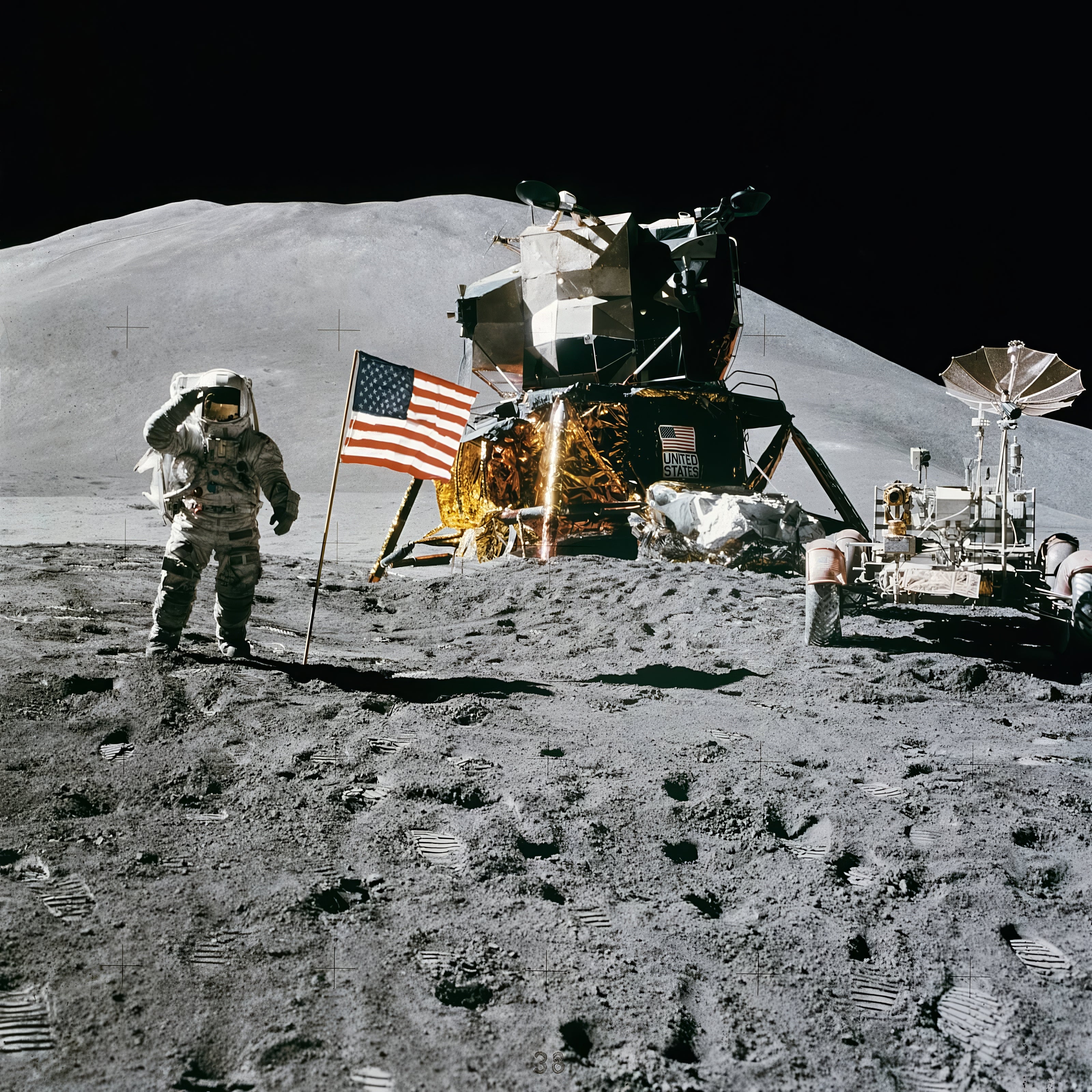
1969 - FLAG ON THE MOON
On July 20, 1969, the Apollo 11 mission achieved what was once thought impossible — landing a man on the moon. As Neil Armstrong took his first steps on the lunar surface, the American Flag was planted on the moon, becoming one of the most iconic images in human history. This moment symbolized not only American achievement but the triumph of human exploration and ambition.
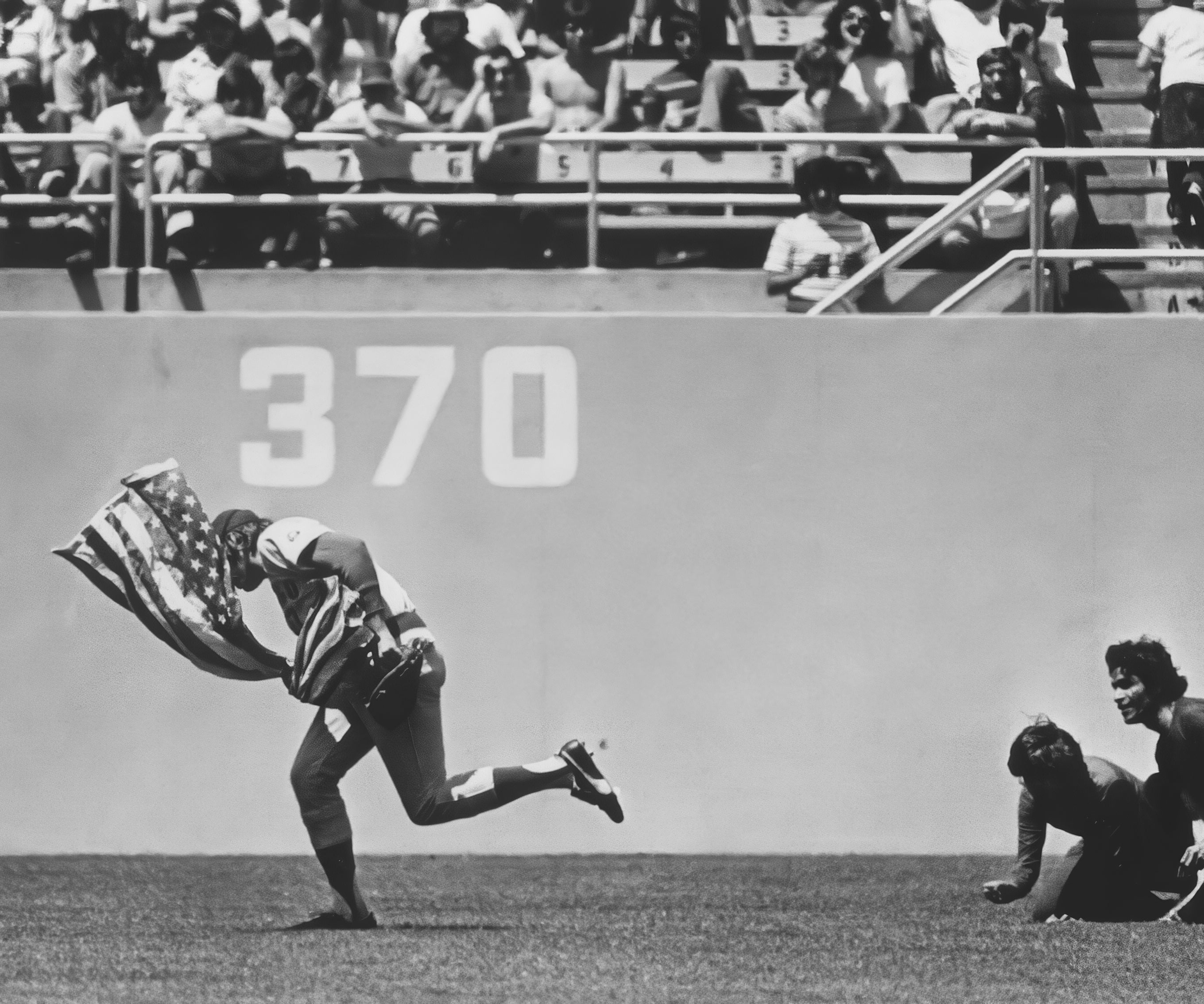
1976 - RICK MONDAY SAVES THE FLAG
On April 25, 1976, during a baseball game at Dodger Stadium, two protesters ran onto the field and attempted to set the American Flag on fire. Chicago Cubs outfielder Rick Monday sprinted over, grabbed the Flag before it could be burned, and carried it to safety. His quick thinking and patriotic act earned him a standing ovation and a place in American sports history. Monday later said, "If you're going to burn the flag, don't do it around me."
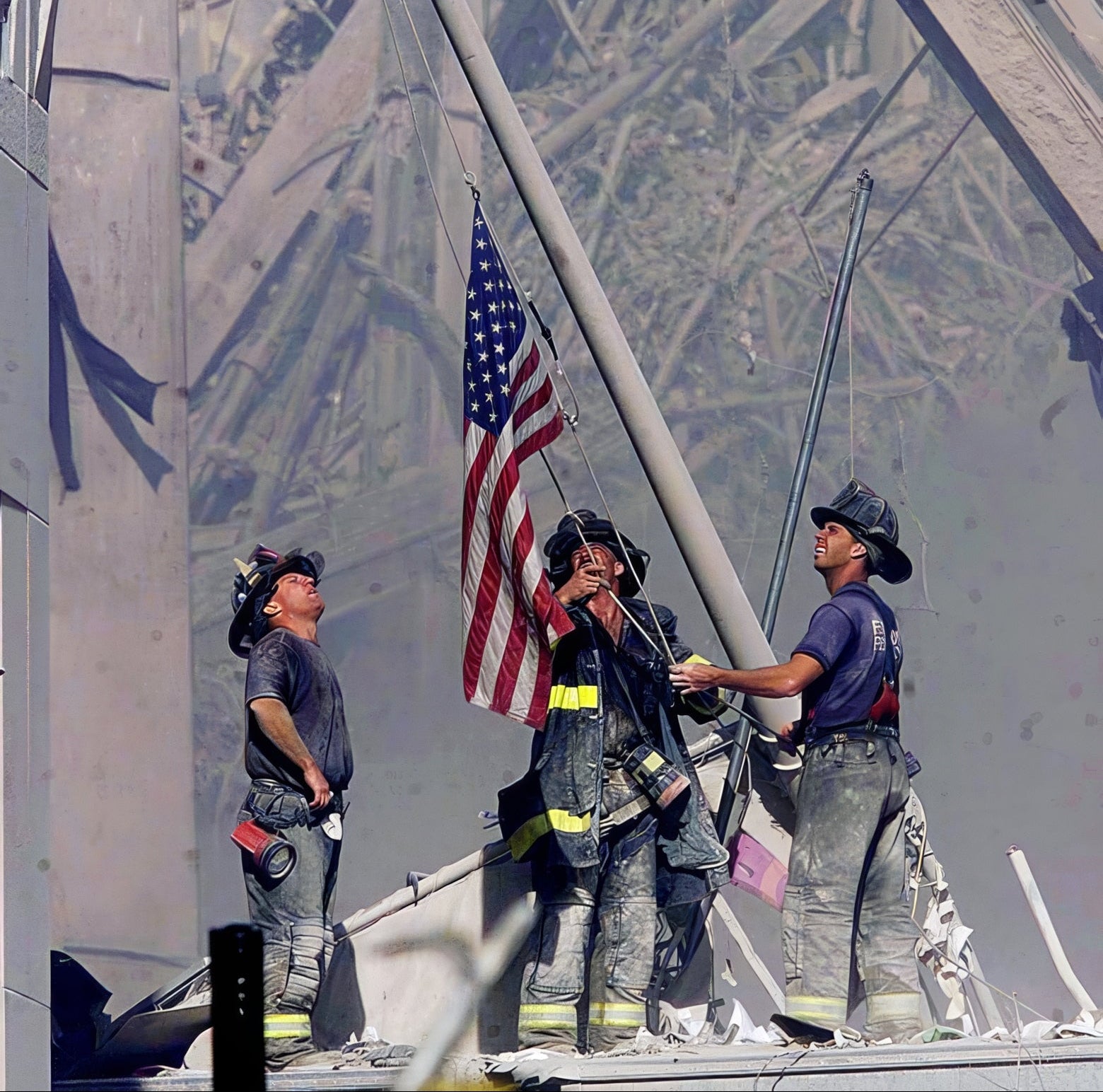
2001 - RAISING THE FLAG AT GROUND ZERO
In the aftermath of the September 11 attacks, three firefighters raised the American Flag amidst the rubble of the World Trade Center. This powerful image became a symbol of resilience and unity in the face of tragedy. It reminded the nation that even in the darkest moments, the spirit of America remains unbroken, and the Flag continues to stand as a beacon of hope.
A SYMBOL THAT ENDURES
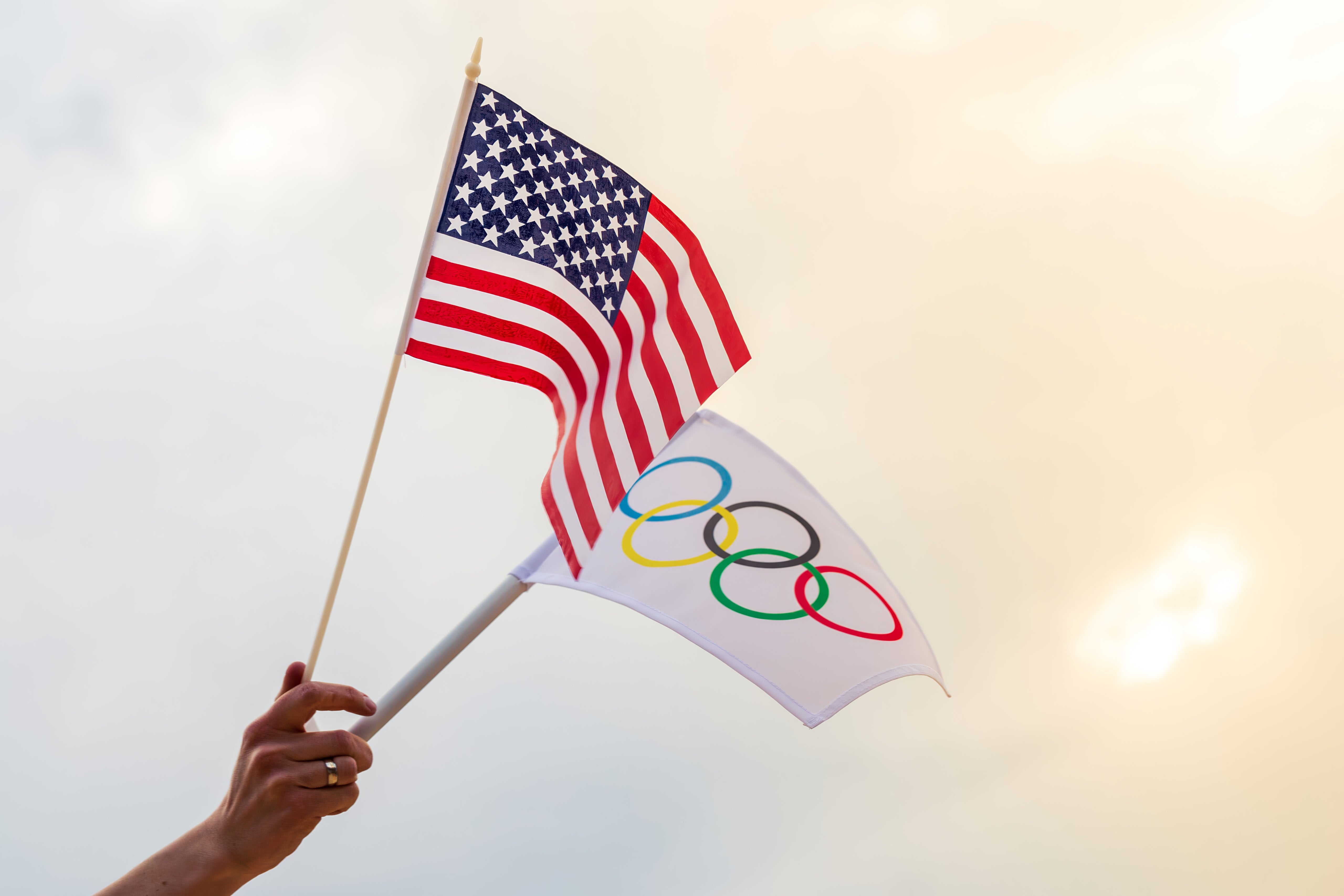
From the battlefields of the Revolutionary War to the surface of the moon, from the steps of the Lincoln Memorial to the rubble of Ground Zero, the American Flag has been a constant presence through triumph and tragedy. It represents the ideals of freedom, democracy, and unity that define the United States. As the nation continues to grow and change, the Flag remains a timeless symbol of the American spirit.